




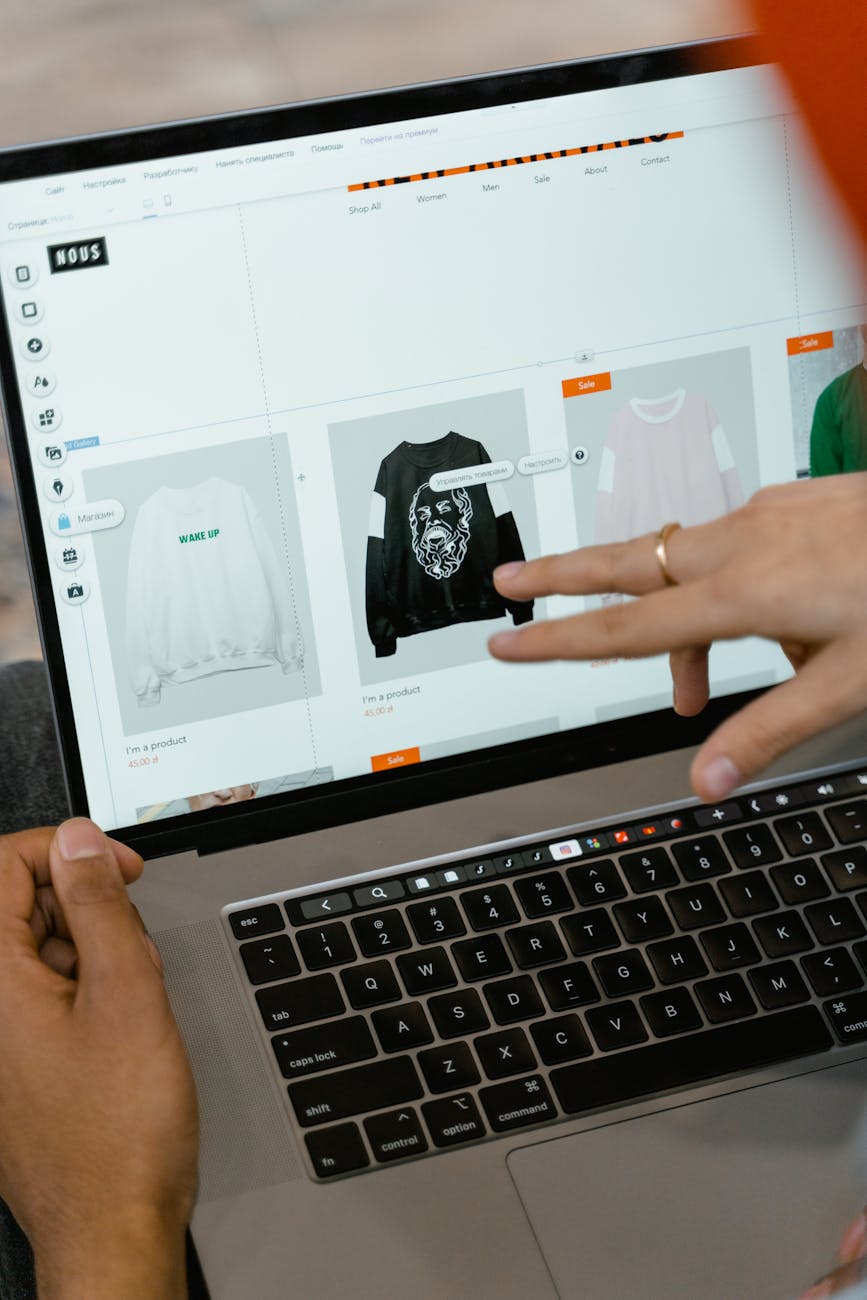

Because traffic means nothing without conversions.
Many small business owners think they have a “website problem.”
But most of the time, they actually have a conversion problem.
You might be getting visitors — but if those visitors aren’t turning into enquiries or customers, your website isn’t doing what it should.
Here’s exactly what every small business website needs to convert more visitors into clients — simply, clearly, and consistently.
✅ 1. A Clear Value Proposition (In the First 3–5 Seconds)
Visitors won’t waste time figuring out what you do. Your homepage should immediately answer:
- What do you offer?
- Who is it for?
- Why should they choose you?
Example:
👉 “Professional Web Design & Branding for Small Businesses in Hesse.”
Clarity converts. Confusion kills conversions.
✅ 2. One Strong Call-to-Action (CTA)
If your website doesn’t tell visitors what to do next, they’ll do nothing.
Your CTA should be:
- Clear
- Repeated throughout the site
- Action-oriented
Examples:
- Book a Free Consultation
- Get Your Quote
- Start Your Project
Add it in your:
- ✔ Header
- ✔ Hero section
- ✔ Footer
- ✔ End of every page
✅ 3. Social Proof (Even One Testimonial Helps)
People trust people — not websites.
Add:
- Google reviews
- Short testimonials
- Case studies
- Before/after projects
- Client logos (if relevant)
Even one real review can significantly increase conversions.
✅ 4. Simple, Clean Design (No Overcomplication)
Complicated layouts and clutter reduce trust and distract visitors.
Conversion-focused design includes:
- Clean spacing
- Easy-to-read fonts
- Consistent colours
- Clear headings
- Logical structure
Beautiful is nice. But simple converts better.
✅ 5. Mobile-First Experience
Over 60% of your visitors come from mobile.
If your site is hard to use on phones, you lose conversions instantly.
Your site must:
- Load fast
- Fit the screen
- Use large, tappable buttons
- Display content cleanly
Mobile experience is no longer optional — it is your website.
✅ 6. A Strong “About” Section That Builds Trust
Your About page or section shouldn’t be a biography.
It should answer:
- Who you help
- Why you care
- What makes you trustworthy
- Why people choose you
This is where human connection happens.
People buy from people — especially small businesses.
✅ 7. A Simple Contact Process
If contacting you feels difficult, conversion drops immediately.
Your contact page should include:
- A short, simple form
- Email address
- Phone number
- Your location (or service area)
- Clear reassurance (“I usually reply within 24 hours”)
Make it easy to reach you. Easy = conversions.
✅ 8. A “How It Works” Section
This is one of the highest-converting website elements — and most small businesses forget it.
Visitors want to know the process before committing.
Example:
How It Works
- Book a free call
- I create your branding or website plan
- We build your project together
- You launch with confidence
Clarity = trust.
Trust = conversions.
🟢 Bonus: Remove Anything That Doesn’t Support Your Goal
Every page should move the visitor toward:
- Contacting you
- Buying
- Booking
- Requesting a quote
Remove:
- Unnecessary sections
- Extra navigation links
- Distracting animations
- Huge blocks of text
- Irrelevant images
Conversion-focused design is about guidance, not decoration.
Want a Website That Converts Visitors into Clients?
At Ash Grove Design, I specialise in:
- Conversion-focused web design
- Small business branding
- Clear messaging
- User-friendly, clean layouts
- Affordable website packages
If you want a website that finally works the way it should — let’s talk.
📩 Click here to book your free consultation and let’s turn your visitors into customers.
